
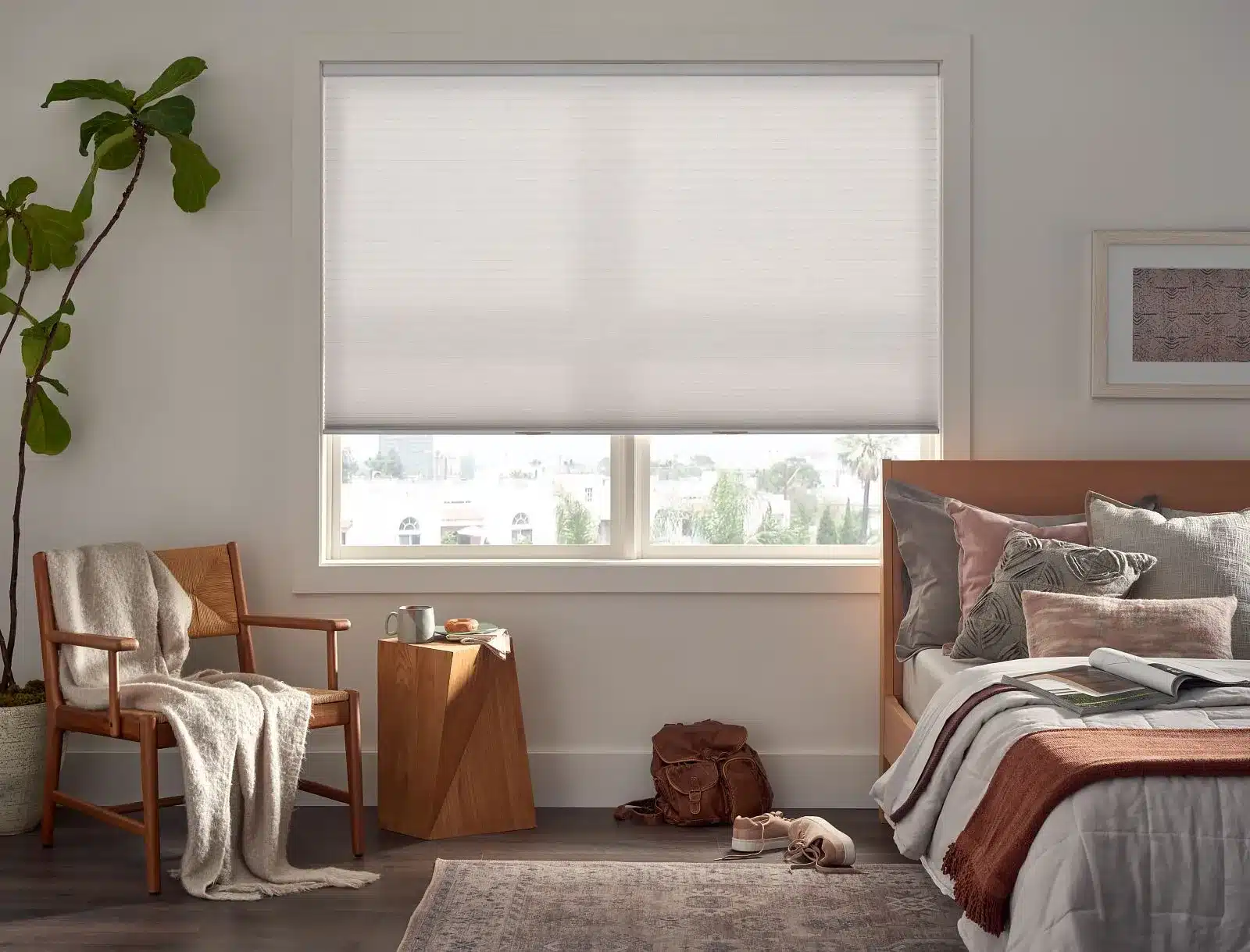
When sunset doesn’t arrive until nearly 9 PM in June and your infant still needs a 7 PM bedtime, you’re fighting physics. Madison WI families face a unique sleep challenge—our northern latitude delivers some of the longest summer daylight hours in the Midwest, while winter brings the opposite problem: dark mornings that make waking difficult and cold window drafts that spike your Madison Gas & Electric bill.
If you’re a young professional family near UW Hospital or one of the thousands of Epic employees in the Verona-Madison corridor with a newborn, you already know generic curtains won’t cut it. This guide covers exactly what blackout shades Madison WI homes need—specific to our climate, our housing stock, and our budget-conscious values.
Why Madison’s Climate Demands True Blackout Solutions
Standard window treatments weren’t designed for Madison’s extremes. Our city sits at 43°N latitude, which means summer solstice delivers 15 hours and 22 minutes of daylight (Source: U.S. Naval Observatory, 2024). That’s nearly an hour more than cities like Kansas City or Denver experience. For nurseries, this creates a biological nightmare—infant circadian rhythms depend on darkness to trigger melatonin production.
The Summer Sleep Deficit Problem
Parents in Shorewood Hills and Maple Bluff report the same frustration every June: babies who napped perfectly in April suddenly refuse to settle. The culprit isn’t developmental regression—it’s the 8:45 PM sunlight streaming through inadequate window coverings. Studies show that even 5 lux of light exposure (about what leaks around a standard roller shade) can suppress melatonin by 50% in infants (Source: Journal of Pineal Research, 2019).
True blackout performance means achieving less than 1% light transmission. Most mass-market “blackout” products actually allow 3-5% light through—enough to create visible glow around edges and disrupt sensitive sleepers. When you’re evaluating nursery blackout shades Madison families actually need, look for products with independent testing certifications, not just marketing claims.
Winter Energy Losses Through Windows
Madison’s winters bring a different window problem. With average January lows of 9°F (Source: NOAA Climate Data, 2024), single-pane windows common in historic Nakoma Craftsman homes create massive thermal bridges. Windows account for 25-30% of residential heating energy use (Source: U.S. Department of Energy, 2023), and in older Madison homes with original glass, that percentage climbs higher.
Cellular blackout shades with honeycomb construction create insulating air pockets that reduce heat transfer. The R-value improvement ranges from R-2 to R-5 depending on cell size and fabric density (Source: Lawrence Berkeley National Laboratory, 2022). For Madison Gas & Electric customers paying winter heating bills, that translates to measurable savings—typically $150-$300 annually for a 1,500 square foot home with 8-10 windows (Source: ENERGY STAR, 2023).
Matching Blackout Shades to Madison’s Housing Stock
Your home’s architecture determines which blackout solutions will perform best and look appropriate. A treatment perfect for a glass-walled downtown condo near Capitol Square would look completely wrong in a 1920s bungalow near the UW-Madison campus.
Historic Craftsman and Bungalow Homes
The neighborhoods surrounding campus and stretching through Nakoma feature gorgeous original woodwork, deep window casings, and often non-standard window dimensions. These homes present three challenges for blackout installation:
- Non-rectangular frames from decades of settling require custom measurements, not standard sizes
- Deep window wells (4-6 inches) can create light gaps if shades mount too far forward
- Historic preservation concerns may limit exterior-facing color options in designated districts
Inside-mount cellular shades with side channels work best here. The channels create a light seal against the window casing, eliminating edge gaps while preserving your home’s character. Expect to pay 15-25% more for custom sizing versus standard dimensions, but the fit ensures true darkness.
Modern Condos and New Construction
Downtown developments near Monona Terrace and newer Middleton subdivisions feature floor-to-ceiling windows, clean lines, and open floor plans. These spaces call for motorized blackout roller shades with minimal hardware profiles.
For bedroom window treatments Madison condo owners prefer, look for:
- Fascia-mounted systems that hide all mechanical components
- Quiet motor operation under 35 decibels (important for nurseries)
- Smart home integration with Apple HomeKit, Google Home, or Amazon Alexa
- Battery-powered options that avoid hardwiring in rental units
Suburban Family Homes
Middleton families and those in newer Maple Bluff developments typically have standard window sizes but multiple bedrooms needing treatment. Budget efficiency matters here—you might need blackout solutions for 4-6 rooms rather than just one nursery.
| Home Type | Recommended Shade Style | Price Range Per Window | Best For |
|---|---|---|---|
| Historic Craftsman | Custom cellular with side channels | $275-$450 | Light seal + energy savings |
| Modern Condo | Motorized roller shades | $350-$600 | Clean aesthetics + automation |
| Suburban Family | Cordless cellular, standard sizes | $150-$300 | Child safety + value |
Child Safety Standards for Madison Nurseries
Wisconsin law doesn’t mandate cordless window coverings, but corded blinds cause an average of 16 child deaths annually in the United States (Source: U.S. Consumer Product Safety Commission, 2023). For Madison families with infants and toddlers, cordless operation isn’t optional—it’s essential.
Cordless Lift Systems
Modern cordless mechanisms use spring-loaded or geared systems that allow you to raise and lower shades by hand. Quality matters significantly here—cheap cordless shades develop tension problems within 12-18 months, requiring manual re-tensioning or professional service.
When selecting room darkening shades Dane County parents trust for nurseries, test the lift mechanism before purchase. Smooth, even operation without jerking indicates better internal components. Ask about warranty coverage specifically for lift mechanism failure—reputable manufacturers offer 5-year or lifetime warranties.
Motorized Options for Added Safety
Motorization eliminates all dangling components entirely. For Shorewood Hills and Maple Bluff homes where nurseries may transition to children’s rooms, motorized blackout shades grow with your family. Young children can operate them via wall switch or voice command without reaching dangerous cords.
“We installed motorized blackout shades in both kids’ rooms when we moved to Nakoma. The 4-year-old operates them himself every night with the wall button, and the baby’s room gets perfectly dark for naps. Our Madison Gas & Electric bill dropped noticeably that first winter too.” — Jennifer M., Nakoma, reduced heating costs by 18%
Installation Considerations for Madison Homes
Proper installation determines whether your blackout shades actually achieve blackout performance. Even the best shade mounted incorrectly will leak light around edges.
Inside vs. Outside Mount
Inside mounts fit within your window frame, creating a clean look but requiring precise measurements. Your window opening must be perfectly square (less than 1/4″ variance corner to corner) and deep enough for the shade headrail—typically 2-3 inches minimum depth.
Outside mounts attach to the wall or molding above and beside your window. They’re more forgiving of imperfect openings and create better light blocking by extending past the window edges. For true blackout in nurseries, outside mounts with 3-4″ overlap on each side typically outperform inside mounts.
Professional Measurement Matters
Madison’s historic homes near the UW-Madison campus and established neighborhoods like Nakoma frequently have windows that appear standard but measure oddly. Professional measurement identifies:
- Frame irregularities that affect shade fit
- Depth limitations that restrict product options
- Obstruction issues (handles, sensors, molding)
- Optimal mounting position for maximum light blockage
Schedule your free in-home blackout shade consultation in Madison today and get precision measurements for every window, with no obligation to purchase.
Comparing Blackout Shade Technologies
“Blackout” has become a marketing term applied to products with vastly different performance levels. Understanding the technology helps you make informed decisions.
Fabric Construction Differences
True blackout fabrics use one of three construction methods:
- Foam-backed fabrics — Acrylic foam laminated to decorative face fabric; most common and affordable
- Multi-layer woven fabrics — Black yarns woven between decorative face and back layers; more durable
- Metallized coatings — Aluminum particles applied to fabric back; best thermal performance but may crack over time
For Madison’s climate demands, multi-layer woven fabrics offer the best combination of light blocking, durability, and insulating value. They maintain flexibility through cold winters without the cracking risk of metallized coatings.
Testing Your Existing Shades
Not sure if your current window treatments are truly blackout? Try this test: on a sunny afternoon, close your shades completely and turn off all lights. Wait 5 minutes for your eyes to adjust. If you can read a book by the light leaking through or around your shades, you’re not achieving blackout conditions.
True blackout means you cannot see your hand in front of your face. That’s the standard Madison nurseries need for optimal infant sleep.
Local Testimonials from Madison Families
Budget-conscious Madison families consistently report that investing in quality blackout shades pays dividends in sleep quality and energy savings:
“As Epic employees, my husband and I both work demanding schedules. Our Middleton townhouse faces west, and summer evenings made our toddler’s bedtime a nightmare. Custom blackout cellular shades solved it completely—she’s asleep by 7:30 even in July now.” — Sarah K., Middleton, daughter’s sleep improved from 9 hours to 11.5 hours nightly
“We renovated a 1915 bungalow near Capitol Square last year. The original windows are beautiful but drafty. Honeycomb blackout shades in the bedrooms cut our heating bill significantly—our Madison Gas & Electric statement showed a 22% reduction December over December.” — Marcus T., downtown Madison, $267 annual heating savings
Taking the Next Step for Your Madison Home
Whether you’re preparing a nursery in Shorewood Hills, upgrading bedrooms in your Maple Bluff family home, or solving sleep issues in a Middleton townhouse, the right blackout shades transform your living environment. Madison’s extreme daylight variations and cold winters demand solutions engineered for performance—not big-box-store compromises.
Professional consultation ensures you get accurate measurements, appropriate product recommendations for your home’s architecture, and installation that actually achieves blackout conditions. For Madison families, that means:
- Babies who nap consistently through those long summer days
- Bedrooms that support healthy sleep for shift workers and early risers
- Energy savings that offset your investment within 3-5 years
- Child-safe operation that gives you peace of mind
Schedule your free in-home blackout shade consultation in Madison today. We’ll measure every window, discuss your specific needs, and provide transparent pricing with no pressure—just hometown value for Dane County families who deserve better sleep.
Frequently Asked Questions
How much do custom blackout shades cost for a typical Madison nursery window?
For a standard 36″ x 60″ nursery window in Madison, expect to invest $175-$350 for quality cordless cellular blackout shades with professional installation. Historic homes with non-standard window sizes common in neighborhoods like Nakoma may require custom sizing that adds 15-25% to the base price. Motorized options start around $350 per window but eliminate all cord hazards and offer smart home integration.
Can blackout shades really lower my Madison Gas & Electric heating bill?
Yes—cellular blackout shades with honeycomb construction add R-2 to R-5 insulating value to your windows. For a typical Madison home with 8-10 windows, this translates to $150-$300 in annual heating savings based on ENERGY STAR calculations. The payback period is typically 3-5 years, after which the energy savings continue indefinitely while you enjoy improved comfort and sleep quality.
What’s the difference between room darkening and true blackout shades?
Room darkening shades block 95-99% of light, which sounds impressive but still allows visible glow that can disrupt infant sleep cycles. True blackout shades block 99.9%+ of light, achieving conditions where you cannot see your hand in front of your face. The difference matters most during Madison’s summer months when 9 PM sunlight can leak through room darkening products and prevent melatonin production in sensitive sleepers.
Are motorized blackout shades worth the extra cost for a Madison family home?
For families with young children, motorized shades eliminate all cord strangulation hazards—a safety consideration that justifies the investment alone. Beyond safety, motorization adds convenience for hard-to-reach windows, enables scheduling that automatically darkens nurseries before naptime, and integrates with smart home systems. Battery-powered motorized options work well in rentals and cost $350-$600 per window installed.