
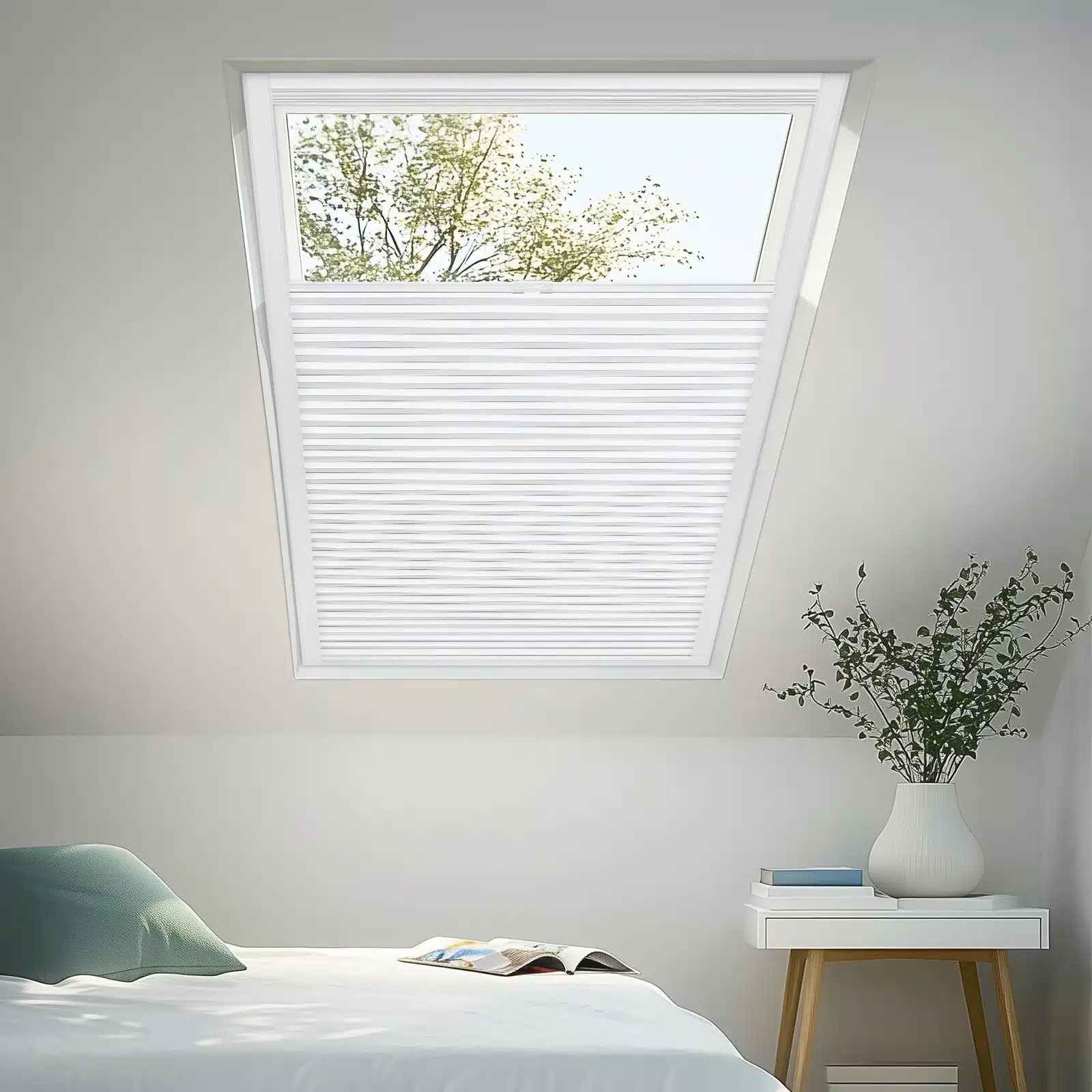
Why Madison’s Vaulted Ceilings Turn Into Summer Ovens
If you own a 1970s-90s split-level home in Wexford Village or Middleton Hills, you already know the problem. Those beautiful cathedral ceilings and skylights that felt so open and airy in February become heat magnets by July. Madison’s summer temperatures regularly exceed 85°F, and your unshaded skylights act like magnifying glasses, pushing upper-floor temperatures 10-15 degrees higher than ground level (Source: U.S. Department of Energy, 2023).
Your air conditioning works overtime. Your Madison Gas and Electric (MGE) bill climbs relentlessly. And those gorgeous vaulted spaces you loved when you bought your home? They’re now the rooms you avoid until sunset.
The solution isn’t replacing your skylights or blocking them permanently. It’s installing purpose-built skylight blinds in Madison WI that give you control over light and heat without sacrificing your home’s architectural character.
The Real Cost of Unshaded Skylights in Wisconsin
Most Madison homeowners underestimate how much heat enters through overhead glass. According to ENERGY STAR, windows and skylights account for 25-30% of residential heating and cooling energy use (Source: ENERGY STAR, 2024). Skylights amplify this problem because hot air rises—meaning heat that enters through your cathedral ceiling stays trapped in your living space.
During Madison’s humid summers, this creates a compounding effect. Your AC runs longer cycles, humidity builds faster, and you’re paying premium rates during MGE’s peak demand hours. A single 2×4 foot unshaded skylight can add $150-300 annually to your cooling costs (Source: National Fenestration Rating Council, 2023).
Skylight Shade Options for Madison’s Split-Level Architecture
Not all skylight shades Madison homeowners choose work equally well. Your solution depends on your skylight’s angle, accessibility, and your primary goal—whether that’s blocking heat, controlling glare, or maintaining a view of the University of Wisconsin Arboretum tree canopy from your living room.
Cellular Honeycomb Shades for Maximum Energy Savings
Cellular shades trap air in honeycomb-shaped pockets, creating an insulating barrier between your skylight glass and your living space. For Madison homes, double-cell designs reduce heat transfer by up to 50% compared to single-cell options (Source: Hunter Douglas Engineering Studies, 2022). These work exceptionally well on the fixed skylights common in 1980s Middleton Hills construction.
- Best for: Fixed skylights in bedrooms and living areas
- Heat reduction: 40-50% solar heat gain reduction
- Light control: Available in light-filtering or room-darkening fabrics
- Operation: Motorized recommended for cathedral ceilings over 12 feet
Solar Screen Shades for View Preservation
If you built or bought your Wexford Village home specifically for natural light and views, you don’t want to block them entirely. Solar screen shades reduce glare and heat while maintaining visibility. They’re particularly effective on south-facing skylights that get direct summer sun from 10 AM to 4 PM.
- Openness factors: 1% (maximum heat blocking) to 10% (maximum visibility)
- UV protection: Blocks 90-99% of UV rays regardless of openness (Source: Skin Cancer Foundation, 2023)
- View clarity: 5% openness maintains clear views of gardens and treelines
Room-Darkening Roller Shades for Bedrooms
Madison’s summer sunrise hits before 5:30 AM. If you have skylights in bedrooms—common in the loft-style master suites of 1970s split-levels—you need complete blackout capability. Modern roller shades with side channels eliminate light gaps that standard shades leave around edges.
Why Hard-to-Reach Window Blinds Require Specialized Installation
Here’s what makes cathedral ceiling blinds Madison WI installations different from standard window treatments: access, safety, and precision. Your 16-foot vaulted ceiling isn’t something you measure with a step stool and a tape measure.
The Measurement Challenge
Skylights in cathedral ceilings often sit at angles between 15 and 45 degrees. Standard blinds won’t operate correctly on angled glass—they’ll sag, bind, or refuse to stay in position. Proper hard to reach window blinds Madison installations require:
- Laser-accurate measurements from scaffolding or professional lift equipment
- Angle calculation to specify tension systems that hold shades in place
- Frame assessment to determine mounting depth and hardware requirements
- Wiring evaluation for motorized options, including proximity to electrical circuits
Motorization: Not Optional at 15+ Feet
Manual operation chains or cords simply don’t work for skylights you can’t reach. The National Home Builders Association reports that 78% of skylight blind installations in homes with ceilings over 12 feet now include motorization (Source: NAHB Remodeling Trends Report, 2024). Modern systems integrate with:
- Wall-mounted RF remotes
- Smartphone apps for scheduling and automation
- Smart home systems including Alexa, Google Home, and Apple HomeKit
- Sun sensors that automatically close shades when temperatures rise
For Madison homeowners, automated sun sensors pay for themselves quickly. Program your shades to close when afternoon sun heats your south-facing skylights, and you’ll see immediate reductions on your MGE summer bills.
Comparing Skylight Blind Options for Madison Homes
| Shade Type | Heat Reduction | Light Control | Best Application | Price Range (per skylight) |
|---|---|---|---|---|
| Cellular Honeycomb | 40-50% | Excellent | Living rooms, bedrooms | $350-$700 |
| Solar Screen | 25-40% | Moderate | Rooms prioritizing views | $275-$550 |
| Blackout Roller | 35-45% | Complete | Bedrooms, media rooms | $300-$600 |
| Venetian/Slat | 20-35% | Adjustable | Modern aesthetic preference | $400-$800 |
Prices include professional installation for standard skylight sizes. Cathedral ceiling installations may require additional lift equipment fees.
What Madison Homeowners Experience After Installation
“Our Middleton Hills split-level has three skylights in the great room—facing south. By 2 PM in July, that room was unusable. We installed cellular shades with sun sensors last spring, and our MGE bill dropped 22% compared to the same months last year. The automation means we don’t even think about it anymore.”
— Sarah M., Middleton Hills, Madison WI
Homeowners consistently report three immediate benefits after installing skylight blinds Madison WI solutions:
- Temperature consistency: Upper floors match ground-floor temperatures within 2-3 degrees
- Reduced AC cycling: Systems run shorter, more efficient cycles
- Reclaimed living space: Rooms that were avoided in summer become usable year-round
Local Trust Built Over Time
When you’re investing in specialized window treatments for hard-to-reach installations, you need confidence in your installer. Look for companies with:
- Verified Wisconsin contractor licensing
- Manufacturer certifications for motorized skylight systems
- Documented experience with cathedral ceiling installations
- References from Madison-area projects, particularly in neighborhoods like Wexford Village
- Warranties covering both product and installation labor
The right installer will schedule a no-obligation assessment at your home, bring proper measurement equipment, and provide detailed specifications before you commit to any purchase.
Take Control of Your Madison Home’s Comfort
Those stunning skylights in your cathedral ceiling don’t have to be energy liabilities. With the right skylight shades Madison homeowners trust for their split-level and contemporary homes, you can slash summer cooling costs, eliminate upper-floor hot zones, and enjoy the natural light you fell in love with—on your terms.
Whether you’re near the walking trails at Olbrich Botanical Gardens or tucked into a wooded lot in Middleton Hills, your skylight challenges are solvable. The key is working with specialists who understand both the products and the unique installation demands of hard-to-reach cathedral ceiling windows.
Request your free skylight assessment and discover the perfect solution for your hard-to-reach windows. We’ll measure precisely, recommend options matched to your goals and budget, and handle every detail of your installation—so you can finally enjoy comfortable temperatures in every room of your Madison home.
Schedule Your Free Assessment Today
Frequently Asked Questions
How long does professional skylight blind installation take in cathedral ceiling homes?
Most Madison installations with 2-4 skylights complete in a single day, typically 4-6 hours. Cathedral ceilings over 15 feet require lift equipment setup time, adding approximately 1-2 hours. Motorized systems with smart home integration may require a brief follow-up visit for programming and calibration with your specific devices.
Can existing skylight frames support motorized blind systems without modification?
Approximately 85% of skylights installed in Madison’s 1970s-90s split-levels have sufficient frame depth for modern motorized brackets. During your assessment, technicians evaluate mounting surfaces, measure available depth, and identify any structural modifications needed. Most frames require only minor bracket adaptations rather than complete replacement.
What maintenance do skylight blinds need in Wisconsin’s variable climate?
Skylight blinds in Madison homes require minimal maintenance—typically dusting with an extension tool 2-3 times yearly and battery replacement for motorized remotes every 12-18 months. Hardwired motorized systems need no regular maintenance. Fabric shades may benefit from professional ultrasonic cleaning every 3-5 years to remove accumulated dust that can affect smooth operation.
Do skylight shades work effectively on north-facing skylights that don’t get direct sun?
Yes, though the benefits differ. North-facing skylights in Madison still contribute to heat gain through diffused radiation and create glare on screens and surfaces. Light-filtering cellular shades reduce glare while maintaining soft illumination, and they provide valuable insulation during winter months when heat loss through north-facing glass becomes the primary concern.